The Silver Spoon’s Changing Place at the Table
Trace the silver spoon’s changing place at the table, from prized display to familiar utensil, and learn how setting, form, and material shape its meaning.
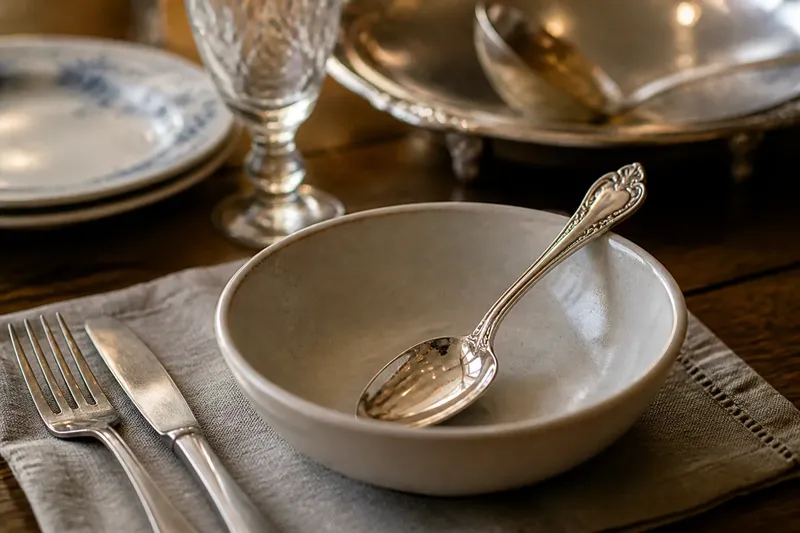
At a family table, one silver spoon may sit beside a plain ceramic bowl while the rest of the cutlery is steel. That contrast captures the silver spoon’s changing place at the table: it might be displayed as a valued possession, kept for guests, or used in an ordinary meal. Its role depends on the object and the household around it.
Begin with the spoon’s job
A spoon’s bowl holds liquid or soft food, and its handle guides the utensil in the hand. That familiar action can make the silver spoon seem timeless, but its place in a household depended on access to silver, serving customs, and the value attached to finished metal goods.
Notice the scale and shape before assigning a date or purpose. A broad, deep bowl may suit soup or serving; a smaller bowl and slender handle may suggest tea or dessert. These clues point toward use, but they do not identify a specific owner or period on their own.
Follow the form from bowl to neck, handle, and tip. A practical spoon carries food and rests in the hand; ornament concentrated on the handle can make its material and workmanship visible without changing that basic function.
Display made silver visible at the table
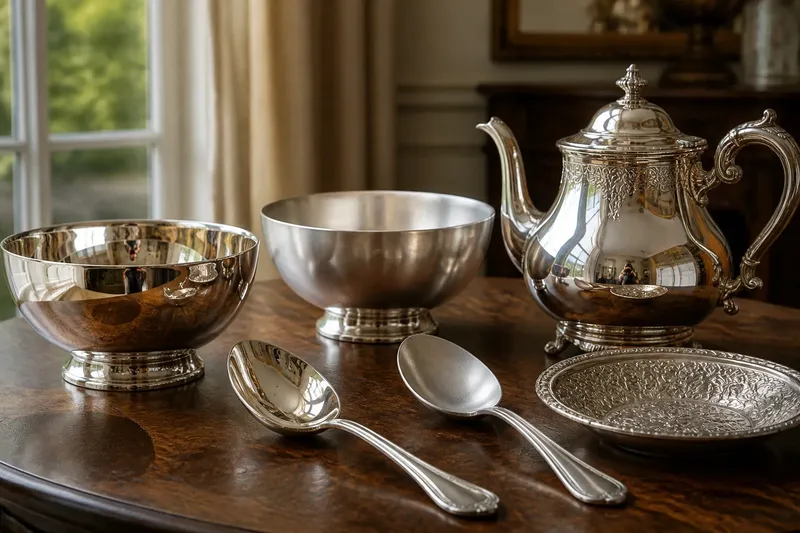
Silver’s appeal was not limited to eating. A polished spoon could catch light among dishes and glassware, while a collection could signal that its owner had the means and inclination to acquire, maintain, and present valued household goods.
Display did not require a cabinet. A spoon could appear in a place setting, on a serving tray, or among pieces brought out for guests. Its placement made the metal visible even as its shape showed what it was for.
Look at what surrounds it. Matching pieces draw attention to a coordinated service; a single silver spoon beside everyday crockery makes its material stand apart. The same spoon can take on a different meaning as the setting changes.
Access varied by place, period, and household
There was no single, universal shift from rare possession to everyday utensil. In nineteenth-century Britain and the United States, industrial production and silver-plated wares helped make silver-colored table goods available to more households than solid-silver pieces alone could serve. Access still varied with household means, local markets, and dining customs; plated goods were not the same material as solid silver.
Pieces also entered homes in different ways. A spoon might be inherited, bought as part of a service, or acquired individually. Some households reserved silver for formal meals, while others used certain pieces more routinely. Those patterns varied, so a spoon’s presence at the table does not tell its full history by itself.
Imagine a household with a silver spoon kept in a lined case beside a teacup. Someone begins setting it beside that cup for a quiet afternoon meal, then returns it to the case afterward. The observable change is in the routine: the spoon is handled for a familiar purpose, but its storage still marks it as special. This invented situation shows how regular use and careful display can coexist.
Use these observations to decide what context the spoon suggests:
- Task: Check the bowl’s size and depth. If it appears suited to a particular food or serving role, describe that as a likely function; if not, avoid assigning a specific task.
- Set: Compare the spoon with nearby utensils. If its pattern or material matches, consider it part of a coordinated group; if it stands alone, treat it as an individual piece rather than assuming it once belonged to a set.
- Storage: Notice whether it rests in a case, with everyday cutlery, or beside serving pieces. If it is kept apart, consider display or protection; if it is stored with daily utensils, consider routine use, while leaving room for other explanations.
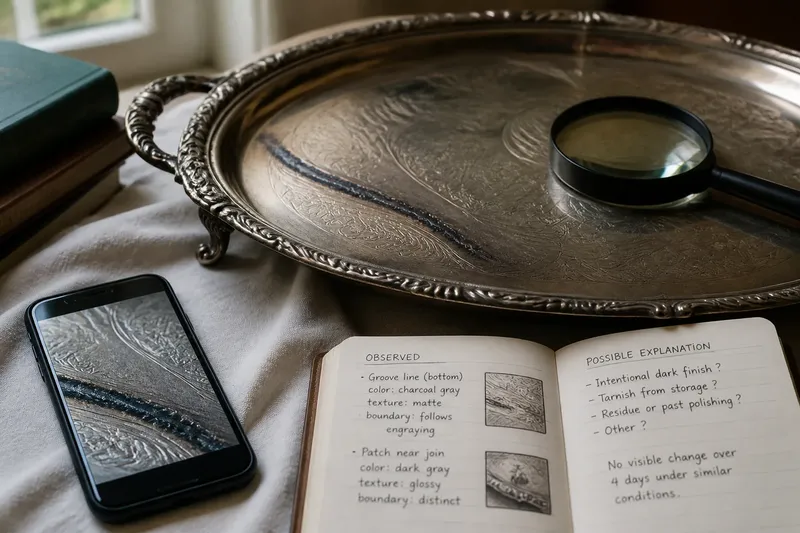
- Wear: Look for surface changes or marks where the spoon meets the hand or other objects. If wear is present, treat repeated handling as one possibility; if it is absent, do not conclude that the spoon was never used.
- Material: Check for marks and signs of construction without relying on color alone. If the identification is clear, record what the marks indicate; if not, consult a qualified silver specialist before treating the spoon as solid silver.
- Setting: Observe whether the surrounding table is formal, personal, or plainly practical. If the arrangement emphasizes matching pieces, note the coordinated presentation; if it mixes materials, note the contrast without inferring a specific owner or occasion.
Position changes the spoon’s role
A spoon placed beside a bowl appears ready for use; one laid across a saucer may be associated with a hot drink; a serving spoon presented in a dish belongs to a shared meal. Position helps show what action the table invites.
Compare a matched service with an assembled setting. Matching pieces suggest a coordinated group, while a mix of old and new utensils may reflect practical substitution or gradual collecting. Those are possibilities, not proof. The useful observation is whether the spoon belongs visually to a set or stands apart.
Scale also shapes the scene. A small spoon appears intimate and task-specific; a large serving spoon takes up more space and suggests food shared among diners. Watch the hand action each form invites: that is where function becomes visible.
What does a silver spoon reveal at a glance?
Does a silver spoon always mean solid silver?
No. A spoon may be solid silver, silver-plated, or made from another material with a silver-colored finish. Marks can offer clues, but ask a qualified appraiser or silver specialist to assess an unclear piece.
Why do some silver spoons look more formal?
Decoration, matching companions, and display all contribute to that impression. A restrained spoon in daily use may feel less ceremonial than an ornate one presented with coordinated tableware, even if both serve similar purposes.
Can wear show that a spoon was used regularly?
Wear can be consistent with repeated handling, but it may also result from storage, cleaning, or contact with other objects. Read it alongside the spoon’s form, marks, and setting rather than treating one surface clue as a complete history.
How should a silver spoon be used today?
Consider its material, condition, and personal significance. A sturdy spoon intended for table use may suit an ordinary meal; if it is fragile or its material is uncertain, seek advice from a knowledgeable professional before using it with food.
Let condition guide handling and care
Familiar use does not mean ignoring condition. A loose handle, damaged bowl, or worn plated surface can affect whether a spoon is suitable for food service. Check it in good light, and do not treat an inherited or collectible piece as ordinary cutlery until you understand its material and condition.
Handle the spoon with clean, dry hands and return it to a stable place where it will not rub against harder utensils. Set it down rather than dropping it into a crowded drawer or bowl.
Cleaning choices depend on material, finish, condition, and any maker’s instructions. A silver-colored coating may respond differently from solid silver. If the spoon has significant sentimental or monetary value, consult a qualified silver specialist before using an abrasive product or attempting a repair.
The silver spoon’s changing place at the table depends on its setting
The silver spoon’s changing place at the table is not a tidy story in which display vanished and everyday use took over. One object can be carefully preserved, brought out for guests, or used with a familiar cup. Access, household habits, and the arrangement of a meal all shape its role.
Before deciding what a spoon represents, notice where it rests. Beside a bowl, nestled in a case, or separated from a mismatched drawer, it offers different clues about how people made silver part of daily life. A useful distinction is whether the object is being shown, used, or asked to do both.